Kenya's goon economy: How unemployment fuels the market for political violence
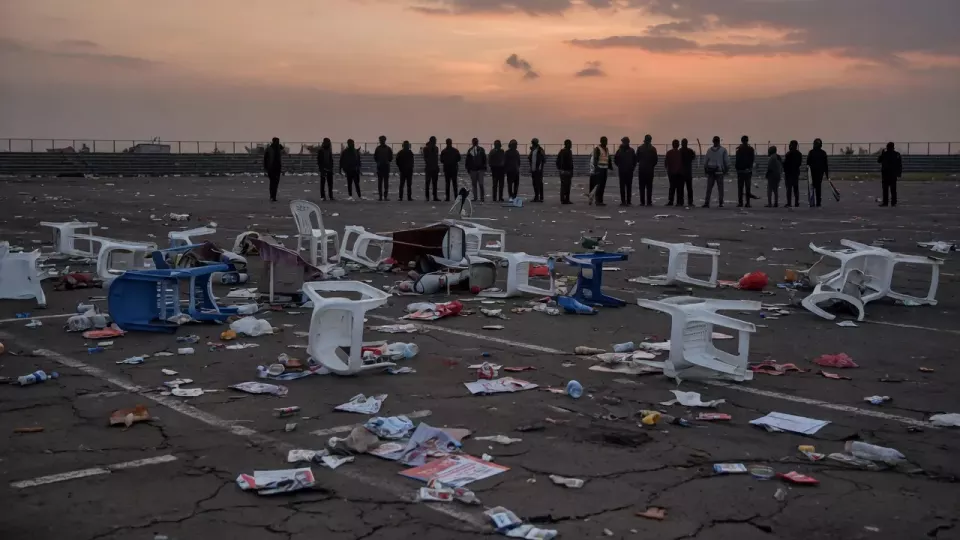
In Kenya’s informal settlements, a labour market operates in plain sight yet entirely outside public accounting. Its commodity is controlled aggression. Its workforce is young, unemployed men with limited alternatives. And its clients, according to researchers, are political actors who pay in cash and deny any connection once the violence is done.
Key points
- Odipo Dev and Tribeless Youth research maps a structured, hierarchical market for political violence among unemployed Kenyan youth.
- Foot soldiers operate in crews of 20 to 50; intermediaries called 'wasangwenya' shield clients from direct contact.
- Study titled 'Goonland' is based on interviews with young men aged 18 to 30 conducted in late 2025.
- Political clients reportedly pay cash for violence and deny any connection once the acts are carried out.
A study by Nairobi-based research firm Odipo Dev, produced with the group Tribeless Youth under the title Goonland: Looking Beyond the Money and Violence in the Political Exploitation of Young Men, maps this system with unusual specificity. Based on interviews with young men aged 18 to 30 conducted in late 2025, it describes not spontaneous unrest but a structured supply chain for political coercion.
A tiered market with invisible clients
The hierarchy is layered by design. At the base are foot soldiers — crews of 20 to 50 men deployed for specific tasks. Above them sit intermediaries known as wasangwenya, who negotiate payment and prevent clients from making direct contact with those carrying out the violence. At the top are the clients themselves: ward councillors, members of parliament, county governors, and occasionally land speculators or business interests seeking political cover.
Payment scales with the rank of the commissioning party. According to Odipo Dev’s research, a ward-level deployment yields roughly 500 shillings — about four US dollars. A parliamentary assignment commands 1,000 shillings; gubernatorial operations reach between 1,500 and 2,000 shillings, with higher-risk tasks commanding more. Payments are made in cash, in new notes, in person. Weapons are distributed through logistics described by interviewees as linked to county-connected vehicles, then disposed of afterwards to eliminate any evidentiary trail connecting patron to act.
Recruitment follows the same logic of deniability. Contact is made through neighbourhood networks rather than digital channels. Participants gather at agreed locations, are instructed to wear black and cover their faces. The invisibility is structural: political patrons remain several layers removed from the acts they commission.
The economics of a surplus labour force
What sustains this market is not political will alone but an underlying surplus of desperate labour. World Bank data cited by the researchers indicates that roughly 800,000 young Kenyans enter the labour market annually, against a formal economy capable of absorbing around 100,000. An estimated 40 per cent of the population lives below the poverty line. Odipo Dev researcher Darius Okolla has observed that in this context, a 500-shilling payment is not trivial — for many recruits it represents a day’s earnings the formal economy routinely fails to offer.
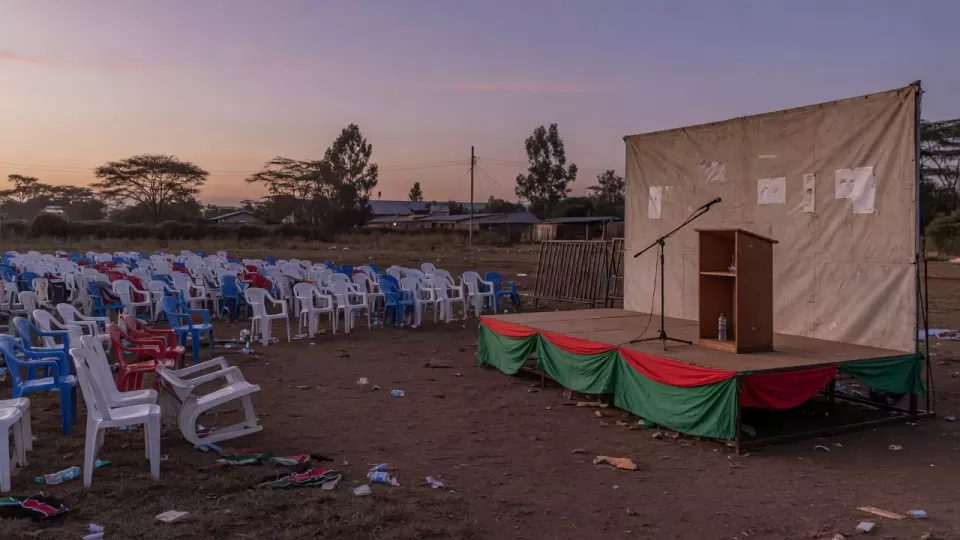
Hussein Khalid of Vocal Africa has warned that the structural conditions feeding this market show no sign of improving as Kenya approaches its 2027 general election. The political actors who commission violence have, if anything, become more adept at maintaining distance and deniability. Researchers document incidents including the disruption of a civil rights gathering in Nairobi — captured on CCTV — and a political rally in southwest Kenya that ended in a fatality, with security forces reported as standing by passively. Exit from the system carries its own coercive logic: interviewees described needing to leave Nairobi for months before they could safely disengage from their patrons.
The research’s central implication is that Kenya’s political violence cannot be addressed primarily as a security problem. As long as the formal economy remains unable to absorb the hundreds of thousands of young people entering it each year, the supply of potential recruits will stay effectively inexhaustible — and those who commission violence will continue to do so at very low cost and very low risk.
Sources: Nation.Africa.