CCTV and IPOA evidence: What the court heard about Albert Ojwang’s final hours
Key points
- Multiple Kenyan newsrooms report that CCTV and IPOA-related testimony place Albert Ojwang arriving at Central Police Station alive.
- Investigators and witnesses have focused on whether surveillance recordings were deleted or formatted after he left the facility unresponsive.
- The case remains before the courts; this report summarises publicly reported evidence themes, not a finding of guilt.
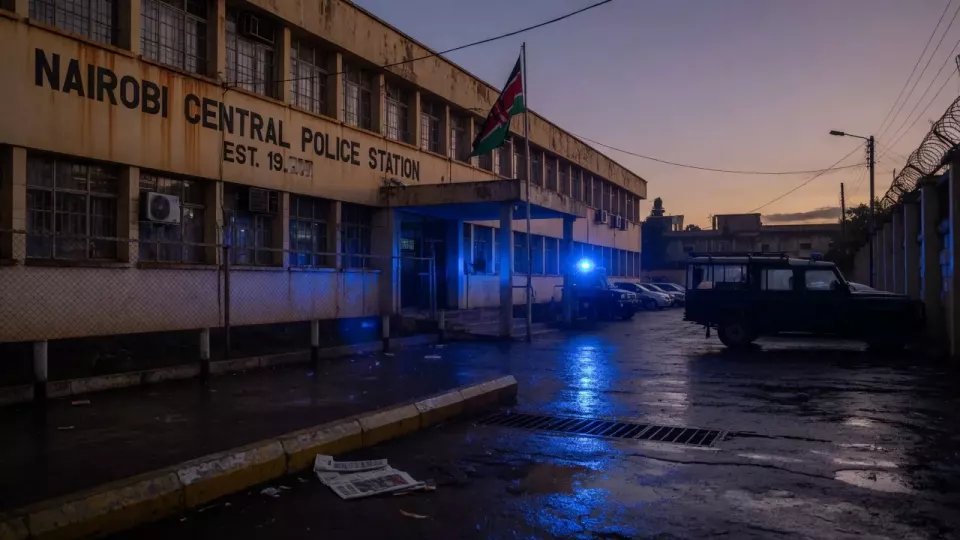
Public interest in the death of activist Albert Ojwang has centred on a simple, devastating timeline: how he entered Nairobi’s Central Police Station, what happened inside, and how he left.
According to multi-outlet Kenyan coverage — including Nation.Africa, The Standard, Capital FM and Eastleigh Voice — forensic and IPOA-linked testimony presented in court has focused on closed-circuit television records from the station and the movements of officers and vehicles on the night in question.
What reporters say the footage shows
Reports quote investigators describing footage in which Ojwang is said to have arrived at the station in the company of several men, with at least one account specifying a dark SUV. Separate reporting says he entered the facility alive and later left unresponsive — a sequence that has become central to the prosecution narrative.
Other coverage has emphasised alleged gaps in the digital record. Witnesses and technicians have reportedly told the court that recording systems or storage devices at the station were formatted or wiped after Ojwang’s death in custody, complicating efforts to reconstruct every minute inside the cells.
Why the surveillance trail matters
In custody-death cases, CCTV is often the public’s proxy for accountability. When recordings are incomplete, families, lawyers and oversight bodies such as the Independent Policing Oversight Authority (IPOA) must rely on partial video, witness statements and forensic pathology.
ZaKenya is not restating any outlet’s full investigation. Readers should treat courtroom claims as contested until tested under cross-examination. Still, the cluster of reporting makes clear that the digital trail — who arrived with Ojwang, who handled him inside, and who controlled the cameras — is now a core issue of national interest.
What to watch next
Hearings are expected to continue testing whether officers orchestrated an assault, whether recording devices were deliberately wiped, and how command responsibility at Central Police Station will be framed. Parallel coverage has also examined the vehicle used to move Ojwang and the condition in which he was removed from the station.
For directory contacts related to policing oversight and justice institutions, see the ZaKenya government directory.
Sources synthesised from public Kenyan media reports. This is original ZaKenya reporting based on multi-source summaries; it is not a reproduction of any single article.