Filmmaker Tosh Gitonga Owes Over Sh1 Million After High Court Rules WhatsApp Chats Binding
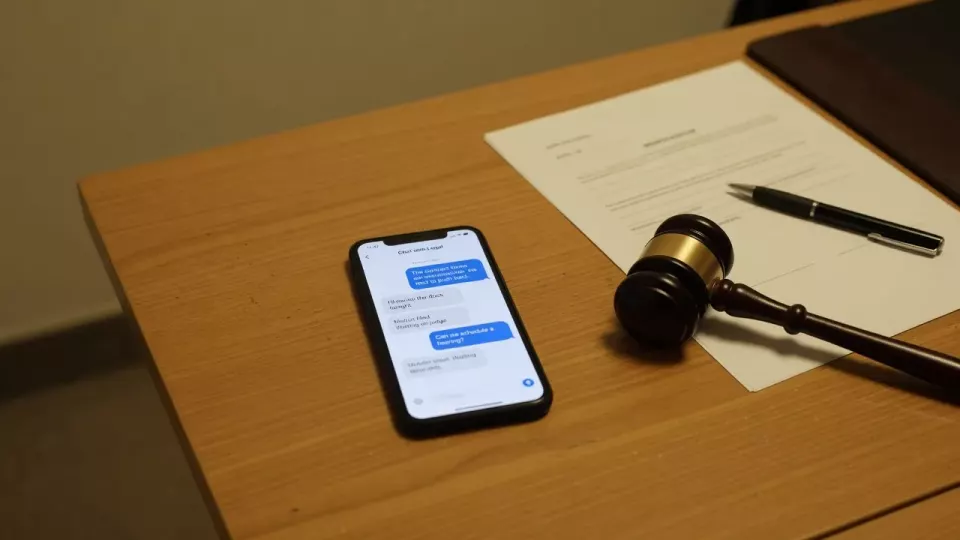
A routine WhatsApp exchange has cost one of Kenya's most celebrated filmmakers more than Sh1 million. The High Court has ruled that messages between director David “Tosh” Gitonga and German picture editor Christian Kramer constituted a legally binding contract, dismissing Gitonga's appeal and cementing a liability that has now crossed the million-shilling mark.
Key points
- Kenya's High Court ruled WhatsApp messages between director Tosh Gitonga and editor Christian Kramer constituted a binding contract.
- Kramer spent about eight days editing a trailer for Gitonga's Netflix series 'Volume' and sought approximately 4,400 euros (around Sh725,000).
- 'Volume' premiered in December 2023 and earned three nominations at the 2024 Zanzibar International Film Festival.
- Gitonga's appeal was dismissed and total liability has now exceeded Sh1 million.
A Trailer Edit That Became a Legal Battle
The dispute dates to 2021, when Gitonga was developing “Volume,” a music-world drama series he planned to pitch to Netflix. He contacted Kramer, a German picture editor, to cut the series trailer — footage that would be used to secure production funding from the streaming platform. Kramer took on the work, spending about eight days on the edit and arranging colour-correction before delivering the finished trailer. “Volume” secured a Netflix deal, premiered in December 2023, and went on to earn three nominations at the Zanzibar International Film Festival in 2024.
When Kramer subsequently sought payment of approximately 4,400 euros — around Sh725,000 at the prevailing rate — Gitonga declined. His argument: no formal written contract had ever been signed, so there was nothing to enforce.
What the Chat Logs Showed
Magistrate Barbara Akinyi at the Milimani Small Claims Court examined the WhatsApp screenshots, email correspondence, and text messages that Kramer had submitted in evidence. She was not persuaded by the absence of a formal document. “It is clear from the claimant’s attached screenshots of their conversations on WhatsApp that there was negotiation and an offer from the respondent to the claimant,” her ruling stated. She also noted that Gitonga had given approval of the final edited trailer — an act the court treated as legal acceptance of the agreement. “The respondent approved the final version of the edited trailer and all this complies with the requirements of the contract,” the judgment read. Kramer was awarded Sh678,403 plus costs and interest from the date of the ruling.
Gitonga did not honour the award. He appealed to the High Court and obtained a conditional stay of execution, which required him to deposit Sh400,000 in court pending determination. He was reportedly unable to raise those funds. In the interim, auctioneers entered Primary Pictures Ltd, his Nairobi production company, and attached assets valued at close to Sh985,000. The High Court has now confirmed, according to Nation.Africa, that the WhatsApp exchanges formed a binding agreement, bringing total liabilities — with accumulated interest and enforcement costs — past the Sh1 million threshold.
The Lesson for Anyone Doing Business on Chat
Under Kenyan law, a valid contract requires an offer, an acceptance, and consideration. None of those elements need to appear on a signed piece of paper. Courts have increasingly recognised digital communications — WhatsApp messages, emails, and text threads — as capable of satisfying all three requirements where the parties have clearly negotiated, agreed, and acted on the arrangement.
The Gitonga case illustrates how a series of chat messages confirming a scope of work, agreeing a fee, and approving a final deliverable can carry the same legal weight as a formal engagement letter. For freelancers, production houses, and businesses that conduct negotiations over messaging platforms, the ruling is a pointed reminder: treat every digital agreement with the same seriousness as ink on paper — because a court may do exactly that.
Sources: Nation.Africa.