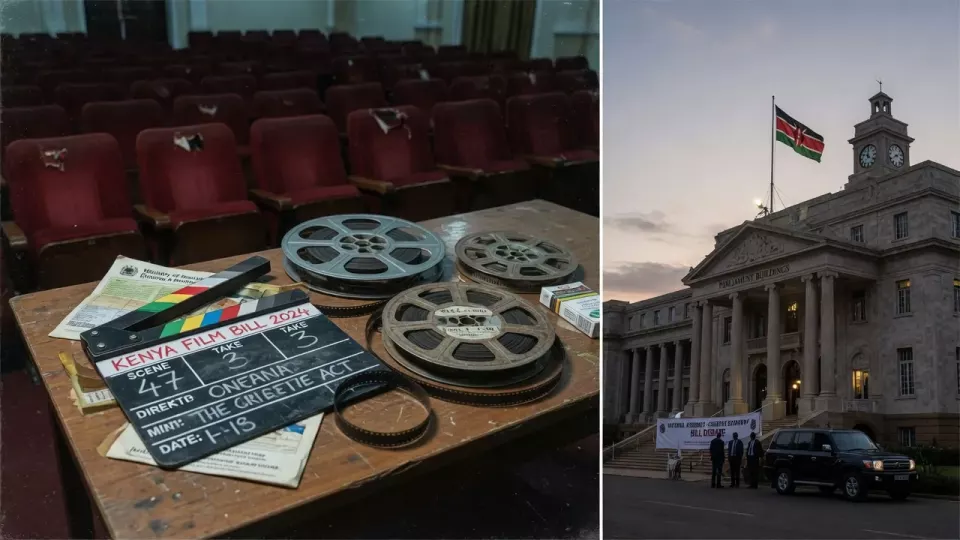
Creative Economy Bill 2026 Faces Revolt From Kenya's Artists

Kenya's Creative Economy Bill 2026 has drawn sustained and formal opposition from across the arts community, with musicians, theatre practitioners, visual artists, writers, and digital creators warning that the proposed legislation is too narrowly framed, explicitly excludes their primary income source, and contains vague clauses that could enable censorship of political satire.
What Artists Are Objecting To
The core objection centres on Clause 5(2), which explicitly excludes intellectual property rights from the bill's scope. Artists describe this as fundamentally contradictory: royalties, licensing fees, and intellectual property licensing are the primary income streams for musicians, authors, songwriters, and visual artists. The bill's institutional architecture focuses almost entirely on audiovisual content — film, television, and cinema — leaving musicians, theatre practitioners, fashion designers, and digital creators without a clear institutional home. Critics also flagged vague morality clauses and the bill's silence on artificial intelligence.
What Comes Next
MPs were reportedly targeting a final review vote by mid-2026, but the volume of formal petitions has prompted calls for a parliamentary committee review prior to the second reading.