
Kenya Records Lowest Maternal Mortality Rate in a Decade After Hospital Investments
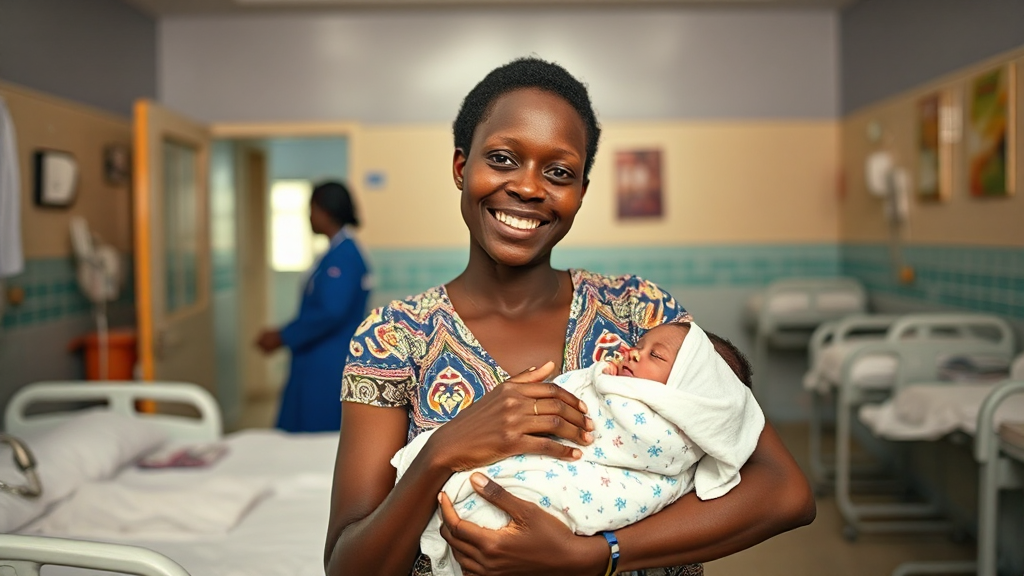
Kenya has recorded its lowest maternal mortality ratio in a decade, according to data released by the Ministry of Health in its 2025 Kenya Health Demographic Survey. The figure stands at 342 deaths per 100,000 live births, down from 395 recorded in 2022 and a significant improvement from the 530 deaths per 100,000 that characterised the pre-devolution era of 2008. Health officials say the decline reflects years of sustained investment in emergency obstetric care, the expansion of the Social Health Authority, and a concerted push to increase the proportion of births attended by skilled healthcare workers.
"This is a milestone that belongs to every midwife, every community health promoter, and every mother who chose to deliver in a health facility," said Health Cabinet Secretary Deborah Mlongo, speaking at Pumwani Maternity Hospital in Nairobi where she unveiled the report. "But we will not celebrate prematurely. A rate of 342 is still far too high, and the disparities between counties remain stark."
The Investments Driving the Decline
Since 2022, the national government has channelled Ksh 47.3 billion into upgrading maternal and newborn care infrastructure across 289 public hospitals. The investments have included the installation of 415 functional theatre units capable of performing emergency caesarean sections, procurement of 1,200 neonatal resuscitation kits, and the training of more than 8,600 skilled birth attendants deployed across all 47 counties.
Counties in the Mount Kenya region and Nairobi Metropolitan area have seen the steepest declines, partly because SHA coverage in urban zones reached critical mass earliest. Kiambu County recorded just 198 maternal deaths per 100,000 births, placing it among the best performers on the continent for a middle-income sub-national unit. In contrast, Turkana, Wajir, and Mandera counties still record rates above 650 per 100,000, reflecting persistent challenges around insecurity, distances to facilities, and cultural preferences for traditional birth attendants.
The government's Beyond Zero campaign, relaunched under a new maternal health framework in January 2025, has deployed 47 mobile maternal clinics — one per county — that travel to hard-to-reach areas twice weekly. In Samburu County, community health promoter Grace Lekuton described the impact as transformative. "Before the mobile clinic came to Wamba, women in labour were being transported on motorbikes for four hours to the nearest hospital. Now we do antenatal care here and refer early," she told ZaKenya.com.
SHA's Role in Increasing Facility Deliveries
A significant driver of the improvement is the increase in facility-based deliveries, which now stand at 72 per cent of all births nationally, up from 61 per cent in 2021. Health economists at the University of Nairobi attribute a substantial portion of this rise to SHA's removal of out-of-pocket delivery charges at Level 3 and Level 4 facilities. Under the old NHIF system, many low-income women faced informal fees that pushed them toward home deliveries.
"The link between insurance coverage and maternal outcomes is not theoretical — it is now empirically demonstrated in Kenyan data," said Dr Mercy Mwangi of the University of Nairobi's School of Public Health. "When women know they will not be detained in a hospital for unpaid bills, they come earlier and they come back for postnatal care."
The Ministry of Health has set a target of reducing maternal mortality to below 250 per 100,000 by 2030, in line with Kenya's commitments under the Sustainable Development Goals. Achieving that goal will require accelerated progress in the ten counties that still account for 44 per cent of all maternal deaths. Funding from the Global Fund and the United States Agency for International Development remains critical to plugging gaps in the north and north-eastern regions, even as the government navigates an IMF austerity programme that has placed pressure on discretionary health spending.