
Kenya's Generic Drug Manufacturing Plant Opens in Thika, Cutting Medicine Costs 40%
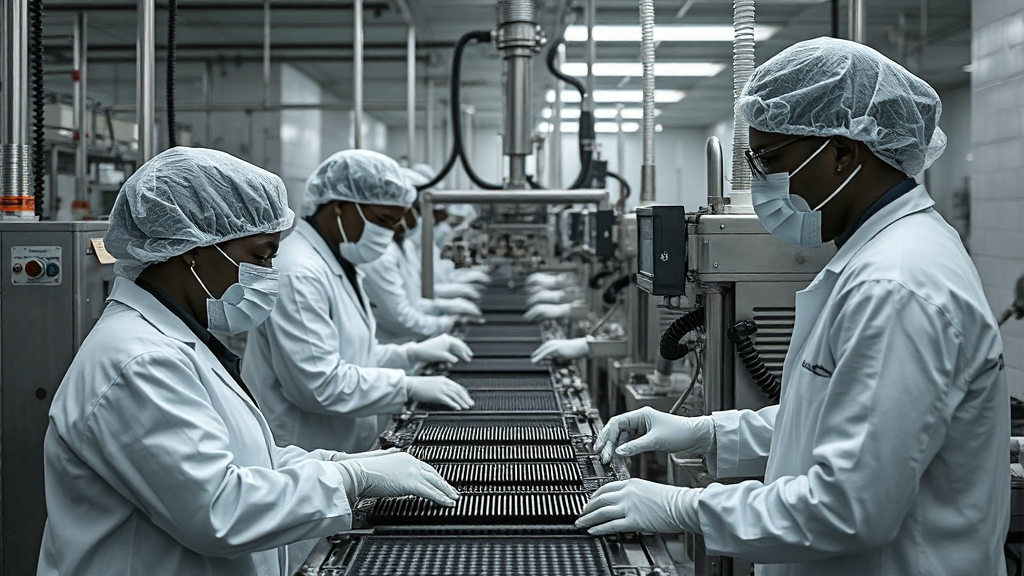
Kenya has taken a decisive step toward pharmaceutical self-sufficiency with the inauguration of the Kenya Essential Medicines Manufacturing Plant (KEMMP) in Thika, Kiambu County. The facility, built at a cost of Ksh 14.7 billion over four years, is projected to supply up to 60 per cent of the country's essential medicines domestically by 2028, reducing dependence on imports from India and China that currently account for over 80 per cent of Kenya's pharmaceutical supply.
President Ruto presided over the plant's official opening ceremony, framing it as a cornerstone of the government's industrialisation agenda and a direct response to supply chain vulnerabilities exposed during the COVID-19 pandemic. "We learnt during COVID that depending entirely on other countries for our medicines is a national security risk. Today we begin to change that," he said.
What the Plant Will Produce
KEMMP's first production lines will manufacture 27 generic medicines from Kenya's National Essential Medicines List, including anti-malarials (artemether-lumefantrine), antibiotics (amoxicillin, cotrimoxazole), antiretrovirals (tenofovir, lamivudine), anti-hypertensives (amlodipine, atenolol), and oral rehydration salts. The facility has a current annual capacity of 480 million tablet equivalents, with provision for a second phase expansion that would double capacity by 2029.
Prices for domestically manufactured generics are expected to be 35 to 40 per cent lower than imported equivalents, according to projections by the Kenya Pharmaceutical Regulatory Authority. A course of artemether-lumefantrine, the first-line malaria treatment, will retail at Ksh 65 at public facilities under the SHA framework, compared to the current Ksh 110 for imported versions. "This is what universal health coverage looks like in practice — affordable medicines that people can actually access," said Pharmacy and Poisons Board Director-General Dr Jacinta Ondati.
The plant meets WHO Good Manufacturing Practice (GMP) standards and has applied for prequalification that would allow it to supply medicines to UNICEF and other UN agencies procuring for the East African region. If granted, the export opportunity could generate revenues of up to Ksh 4 billion annually, making the facility commercially viable without relying solely on the domestic market.
Jobs, Investment, and EAC Integration
KEMMP has created 1,240 direct jobs, the majority of them in Thika, a town historically associated with manufacturing that saw significant factory closures in the 2010s. An additional 3,800 indirect jobs are estimated to be supported through raw material supply chains, packaging, and distribution. Kenya's Export Processing Zones Authority has designated a 12-acre buffer zone adjacent to the plant as a pharmaceutical industrial cluster, inviting private investors to establish complementary production lines.
The East African Community dimension is also significant. Kenya has briefed the EAC Council of Ministers on the plant's capacity to serve as a regional supplier, potentially supplying Uganda, Rwanda, Tanzania, and Burundi as those countries seek to reduce their own import dependency. An EAC pharmaceutical harmonisation framework, which Kenya helped draft, would allow KEMMP-certified medicines to be registered across all partner states without country-by-country clinical re-evaluation — a process that currently adds two to three years to market entry.
The plant was financed through a combination of a Ksh 6 billion government allocation, a Ksh 5.2 billion concessional loan from the African Development Bank, and Ksh 3.5 billion from private equity partners including a consortium of Kenyan pension funds. The Treasury has structured the investment to allow private partners to hold a 34 per cent equity stake while the government retains majority ownership and control over medicine pricing in the domestic market.
For the millions of Kenyans now enrolled under SHA, the plant's output could significantly reduce the cost pressures on the health insurance fund. The SHA Chief Executive Office estimates that lower medicine procurement costs could save the fund Ksh 3.1 billion annually by 2028, funds that can be redeployed to expand specialist care coverage. The Thika plant, in that sense, is not merely an industrial project — it is a pillar of Kenya's ambition to make universal health coverage financially sustainable for a generation.