
Dental Health Crisis in Kenya: Only 1 Dentist Per 150,000 People in Rural Areas
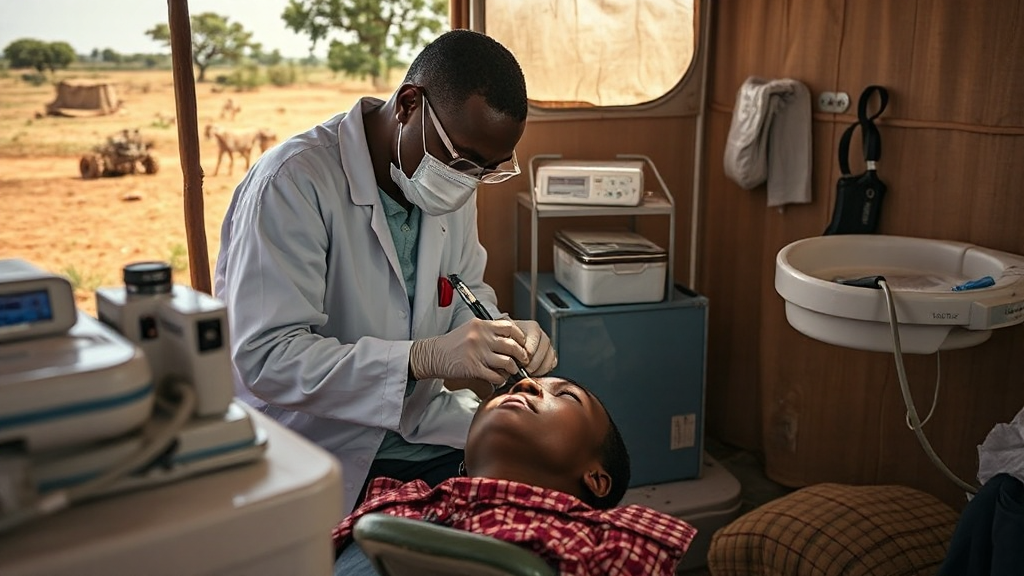
When Mary Akinyi's twelve-year-old son began complaining of a toothache in Turkana County last January, the nearest dentist was a four-hour bus ride away in Lodwar town — and the appointment wait stretched to six weeks. By the time he was seen, the infection had spread to his jaw, requiring emergency surgery that cost the family nearly Ksh 45,000. Stories like his are not exceptional in rural Kenya. They are the rule.
New data released by the Kenya Medical Practitioners and Dentists Council (KMPDC) in June 2026 confirm what health advocates have warned about for years: Kenya has approximately one dentist for every 14,000 people nationally, a figure that masks a grotesque rural-urban divide. In arid and semi-arid counties — including Turkana, Mandera, Wajir, Marsabit, and Samburu — the ratio collapses to roughly one dentist per 150,000 residents, placing Kenya among the worst-served nations in the region for oral health access outside major cities.
The Geography of Neglect
The KMPDC data show that of the country's 5,200 registered dental practitioners, approximately 4,100 are based in Nairobi, Mombasa, Kisumu, and Nakuru. The 23 counties classified as arid or semi-arid share fewer than 80 dentists between them, many of whom work in county referral hospitals that themselves lack basic dental equipment. Mobile dental units, once heralded as a stopgap solution, number fewer than 30 nationally, with the Ministry of Health acknowledging that most have been out of service for over a year due to spare-parts shortages and fuel budget cuts under the current IMF-guided austerity framework.
Dr. Faith Njoroge, vice-chair of the Kenya Dental Association, described the situation as a public health emergency hiding in plain sight. "Oral disease is the fourth most expensive condition to treat globally, yet it is almost entirely preventable," she told ZaKenya. "We are producing roughly 350 dental graduates annually. The problem is not training volume — it is retention. Newly qualified dentists earn Ksh 80,000 a month in a government post. They can earn three times that in a Westlands clinic or five times that in the Gulf. We are haemorrhaging talent."
SHA's Blind Spot
The rollout of the Social Health Authority, which officially replaced the National Hospital Insurance Fund last year, promised to make dental care more accessible through expanded outpatient benefits. In practice, the SHA benefit schedule covers only tooth extractions and basic fillings, and only at accredited facilities — of which fewer than 120 exist outside the seven largest urban centres. Comprehensive periodontal care, root canal treatment, and orthodontics remain entirely out-of-pocket expenses, pushing many Kenyans to delay treatment until emergencies arise.
County health departments have pushed back, arguing that the national government has devolved the mandate for primary dental care without devolving the corresponding budget. Turkana County's Director of Health, Dr. Simon Ekal, noted that his county received Ksh 2.3 million for dental services in the 2025-2026 budget — enough to run one dental chair for approximately eight months. "We cannot recruit what we cannot pay, and we cannot pay because the equitable share formula still underweights health needs in pastoralist counties," he said.
Pathways Forward
Advocates are calling for a combination of compulsory rural service rotations for graduating dentists — similar to schemes operating in Ethiopia and Rwanda — alongside a dedicated dental infrastructure fund under the National Government Constituencies Development Fund. The Kenya Dental Association has also proposed integrating basic oral health screening into the existing community health promoter network, which now reaches over 100,000 households monthly. Training community health promoters to identify early-stage caries and refer patients could dramatically reduce the backlog at county hospitals.
President Ruto's administration has signalled awareness of the gap, with the Ministry of Health committing in its 2026-2030 health sector strategic plan to train 500 additional dental therapists specifically for rural deployment by 2028. Whether that ambition survives the current fiscal environment — with the KRA tasked with closing a Ksh 340 billion revenue shortfall — remains the critical question. For Mary Akinyi's family in Turkana, the answer cannot come soon enough.