Nairobi Becomes East Africa's Top Destination for Foreign Direct Investment in 2026
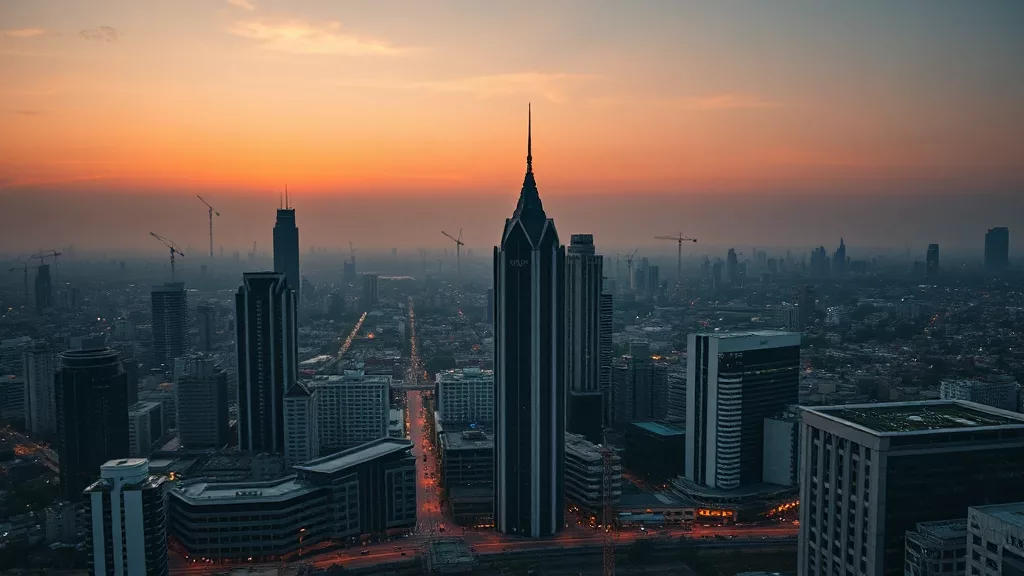
Nairobi has cemented its position as East Africa's premier destination for foreign direct investment (FDI) in 2026, with the Kenya Investment Authority (KenInvest) projecting total inflows of USD 3.8 billion by December — a 27 per cent increase over 2025's figure of USD 2.99 billion and well ahead of regional competitors Dar es Salaam and Kampala.
The milestone, confirmed by KenInvest Chief Executive Stanley Kamau at a briefing in Nairobi last month, reflects sustained investor confidence driven by Kenya's stable macroeconomic environment, improving ease-of-doing-business metrics, and the city's unrivalled position as the technology and logistics nerve centre for the broader East African Community (EAC) bloc.
What Is Driving Capital Inflows
Three sectors account for the bulk of fresh commitments. Technology and digital infrastructure leads with approximately USD 1.1 billion, fuelled by hyperscaler data centre investments — Microsoft's Phase 2 Azure East Africa campus in Tatu City broke ground in April, while a consortium led by Liquid Intelligent Technologies announced a USD 200 million tier-four facility in Athi River. Logistics and cold-chain infrastructure follows at USD 900 million, a figure boosted by the Government's formal designation of the Nairobi-Mombasa corridor as a Special Economic Zone (SEZ) anchor route. Renewable energy closes the top three, with geothermal expansion projects in Olkaria attracting a USD 650 million commitment from a joint Japanese-Korean development finance consortium.
"Kenya offers something rare in our region: political predictability combined with genuine infrastructure," said Priya Chandrasekaran, East Africa Director for the World Bank's International Finance Corporation. "The SGR, the 5G backbone, the port expansion — these are not aspirational. They are operational. That changes an investor's calculus fundamentally."
The Silicon Savannah Effect
Nairobi's tech ecosystem, long branded Silicon Savannah, continues to punch above its weight in attracting venture-linked FDI. The presence of regional headquarters for Google, Microsoft, Meta, and Visa, combined with a burgeoning cohort of homegrown unicorn-track startups, has created a gravity well that pulls in international capital seeking African exposure with de-risked entry points. The Kenya Startup Act of 2022 has matured sufficiently that its investor protection provisions are now routinely cited by deal lawyers as a material differentiator versus rival jurisdictions.
President Ruto, who has personally hosted investor roadshows in London, Singapore, and Dubai this year, has made FDI attraction a centrepiece of his third-year agenda — a strategy partly shaped by awareness that the approaching 2027 election season will require a strong economic record. "Every dollar that comes into Kenya creates a job. Every job is a vote of confidence in what we are building," Ruto told investors at the London Africa Summit in March.
Challenges That Remain
Not everything is smooth. Kenya's IMF programme has imposed fiscal discipline that constrains public co-investment in FDI-linked projects, and some investors have flagged delays in obtaining environmental approvals as a persistent bottleneck. The Gen Z-led protests of 2024, while ultimately resolved, left a residual reputational note in some investor briefings, though most analysts contend the episode demonstrated institutional resilience rather than fragility.
Currency risk remains a live concern following the shilling's volatility in 2023-2024, even as the exchange rate has stabilised around Ksh 128 to the US dollar through H1 2026. The CBK's reserve position, reinforced by the IMF disbursements, currently stands at a comfortable 4.6 months of import cover.
With regional integration under the EAC providing a combined market of over 300 million people, and Nairobi positioned as the de facto gateway, the city's FDI trajectory appears durable. The question for policymakers is less about attracting capital and increasingly about ensuring its benefits percolate beyond Westlands and Upper Hill into the informal settlements where the majority of Nairobi's five million residents live and work.