Kenya's Avocado Season Boosts Smallholder Farmers as Global Demand Stays High
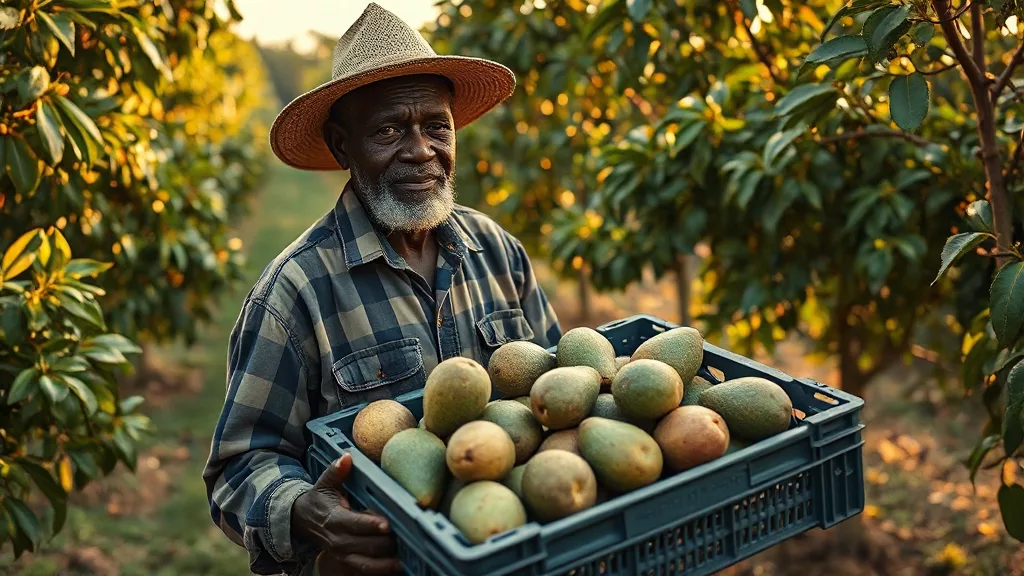
Farmers across Kenya's avocado belt — stretching from Murang'a and Kirinyaga counties through the highlands of the Rift Valley — are counting their best returns in a decade this season, as a confluence of favourable weather, disciplined post-harvest handling, and relentless global appetite for the Hass variety has pushed farm-gate prices to historic highs.
Data released by the Horticultural Crops Directorate (HCD) in late June shows that Kenya exported 97,400 metric tonnes of fresh avocados in the first five months of 2026, a 23 per cent increase on the same period last year. Earnings from those exports reached Ksh 38.6 billion, placing avocado second only to cut flowers as the country's leading fresh produce earner.
Farmers Pocket More Per Kilogramme
The most consequential shift this season has been in who captures the value. Following sustained pressure from county agricultural extension officers and producer cooperatives, a growing share of smallholders are now selling directly to licensed exporters rather than through brokers, shaving out a layer of intermediation that had historically depressed farm-gate returns.
In Kandara sub-county, Murang'a, avocado farmer Grace Wanjiku earned Ksh 48 per kilogramme for her Hass fruit in May — compared to Ksh 29 per kilogramme she received through a middleman during the 2024 season. "The cooperative told us to be patient and deal directly," she said. "This year I cleared a debt I had been carrying for three years."
The Murang'a County government, which has positioned avocado as the centrepiece of its agricultural economy, reports that registered avocado farmers in the county now number 186,000, up from 134,000 in 2023. Governor Irungu Kang'ata's office attributes the growth partly to subsidised seedling distribution and partly to the visible prosperity of early adopters.
The Agriculture and Food Authority (AFA) has meanwhile tightened enforcement of phytosanitary standards after the European Union flagged concerns about chemical residues in a batch of Kenyan avocados in late 2024. Twelve exporters lost their certification that year; none have repeated the violation in 2025 or 2026, a record AFA Director-General Dr Cecilia Kimani credited to "zero-tolerance field audits and the very real fear of being shut out of a market worth billions."
Asia's Appetite Opens a Second Market
Europe remains Kenya's primary avocado destination, absorbing roughly 68 per cent of exports, but the structural story of 2026 is the rapid growth of Asian markets. China, which began accepting Kenyan avocados under a phytosanitary protocol signed in Nairobi in October 2024, imported 9,200 metric tonnes in the first quarter of 2026 alone. Singapore, Malaysia, and Japan are absorbing further volumes, often paying a premium for certified-organic and trace-evidenced fruit.
The Kenya Export Promotion and Branding Agency (KEPROBA) has been running trade missions to Guangzhou and Singapore to seed relationships with retail chains and foodservice distributors. Chief Executive Officer Fiona Kibuuka said the diversification away from European sole-dependency was deliberate policy. "We watched what happened to Kenyan flower exporters during European cold snaps and logistics disruptions. Avocado cannot afford the same vulnerability," she told ZaKenya.com.
Logistics remain a constraint. The perishability of fresh avocado demands reliable cold-chain transport, and while Jomo Kenyatta International Airport has added dedicated refrigerated cargo capacity, airfreight costs have risen sharply since 2024 as belly cargo space tightens. Several exporters are now trialling sea-freight using controlled-atmosphere containers — a technology that can extend shelf life to 35 days — through the Port of Mombasa, making lower-margin markets in the Gulf and South-east Asia commercially viable for the first time.
Climate Risk Lurks Beneath the Optimism
The sector's enthusiasm is tempered by anxiety about climate reliability. The El Niño event of late 2023 and early 2024 caused significant crop loss in low-lying avocado zones, and agronomists warn that the rainfall pattern in the long rains of 2026 — though generally favourable — has shown erratic distribution that could signal increasing seasonal unpredictability.
The Kenya Meteorological Department has advised farmers in Kisii, Nyamira, and parts of Nandi county to consider drip-irrigation installation ahead of the short rains season, counsel that requires capital most smallholders do not yet have. The National Government has allocated Ksh 1.2 billion for irrigation infrastructure under the Agricultural Sector Transformation and Growth Strategy (ASTGS), but disbursement to county governments has been slow.
Despite those caveats, the mood among avocado farmers this July is genuinely buoyant — and for a rural economy still recovering from the financial shocks of austerity-era budget cuts, that buoyancy matters well beyond the farm gate.