Kenya Cotton Farming Revived as Textile Industry Attracts New Investment
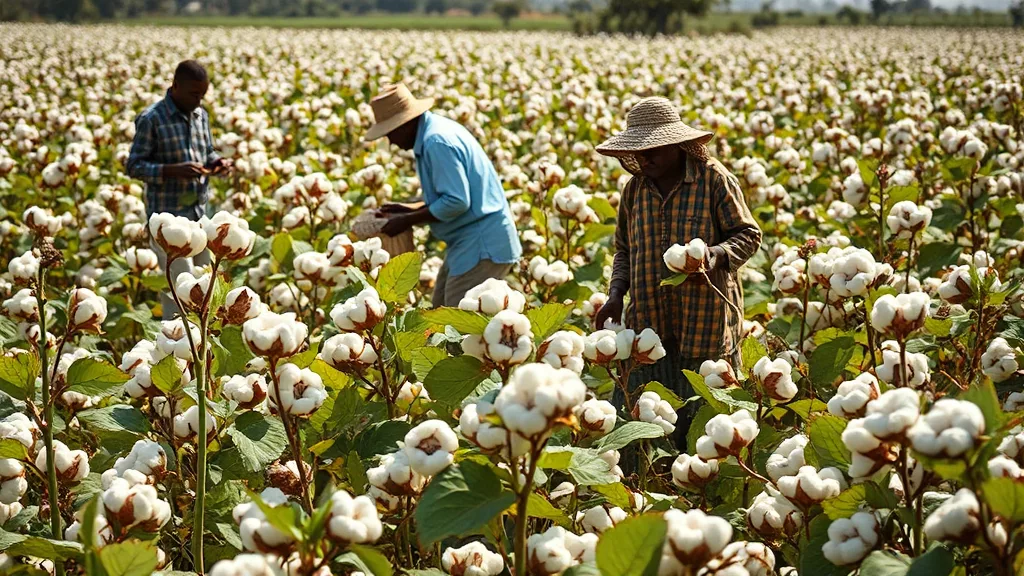
Kenya's cotton farming sector, which languished for much of the past three decades after the liberalisation-era collapse of the Kenya Lint and Seed Marketing Board, is experiencing its most credible revival since independence-era expansion. A combination of government-backed irrigation infrastructure, new Export Processing Zone (EPZ) factory investment, and structured off-take agreements between ginners and smallholder farmer cooperatives has created conditions that industry veterans describe — with characteristic Kenyan understatement — as promising.
Acreage under cotton cultivation reached 180,000 hectares in the 2025/26 growing season, up from 120,000 hectares two years earlier, according to the Agriculture and Food Authority (AFA). Raw lint production is projected at 45,000 metric tonnes for 2026 — still a fraction of the 70,000 metric tonnes Kenya produced at its 1980s peak, but a meaningful step towards the government's target of 200,000 hectares under cultivation by 2028.
Irrigation: Solving the Rainfall Problem
Cotton cultivation in Kenya has historically been concentrated in the semi-arid counties of Makueni, Kitui, Tana River, and western regions including Siaya and Busia, where erratic rainfall has always made production uncertain. The National Irrigation Authority (NIA), working with county governments and the Kenya Rural Roads Authority, has in 2025-26 commissioned 14 new small-scale irrigation schemes specifically designed for cotton zones, covering approximately 22,000 hectares. The schemes, funded through a Ksh 6.8 billion allocation from the National Government Constituencies Development Fund supplemented by USAID agricultural resilience grants, use solar-powered pumps and mobile soil-moisture monitoring to optimise water use — a lesson applied directly from the El Nino flooding episodes that demonstrated the vulnerability of rain-fed production to climate variability.
In Makueni County, where Governor Mutula Kilonzo Junior has made cotton revival a signature agricultural policy, 14,000 smallholder farmers are now enrolled in a structured outgrower scheme with Rift Valley Textiles, which provides certified seed, agrochemical inputs on credit, and a guaranteed floor price of Ksh 80 per kilogramme of seed cotton. "We used to grow cotton and hope someone would come to buy it," said Grace Mumo, a farmer in Kathiani ward who has quadrupled her cotton acreage to four hectares. "Now I have a contract before I plant. That changes everything."
New Factory Investment and the EPZ Angle
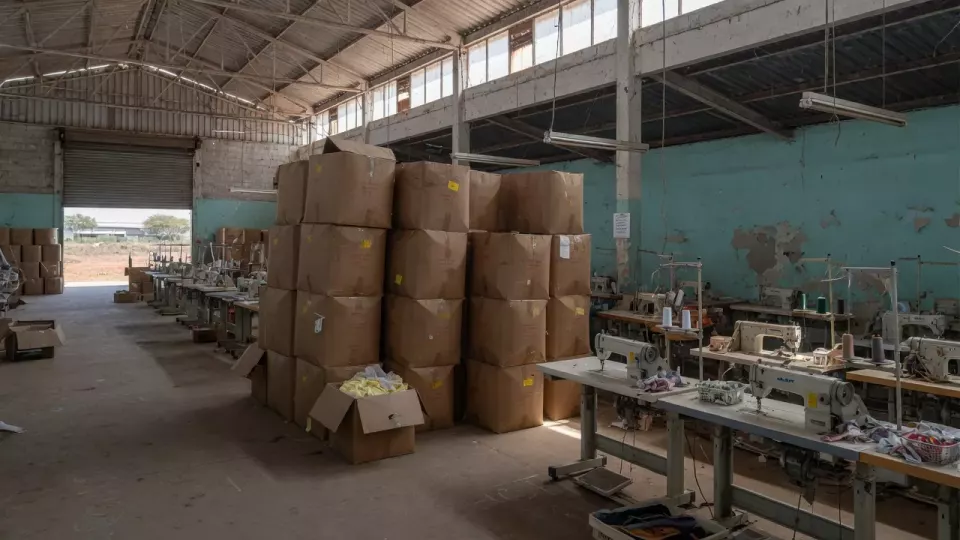
On the demand side, a cluster of new textile and garment manufacturing investments has fundamentally altered the economics of Kenyan cotton. The Athi River EPZ, already home to several garment exporters, added three new spinning and weaving facilities in the first half of 2026, with a combined investment of USD 85 million — the largest single-year manufacturing commitment to the EPZ since 2010. The investors, from India, Bangladesh, and Egypt, were attracted by Kenya's AGOA eligibility, which grants duty-free access to US markets for qualifying apparel products through at least 2031, and by the government's decision to extend the EPZ corporate tax holiday period from 10 to 15 years for investments exceeding USD 5 million.
A Ksh 12 billion ginnery modernisation programme, co-financed by the Development Bank of Kenya and the African Development Bank, is upgrading 18 existing ginneries across cotton-growing counties with higher-throughput equipment that reduces processing time and improves lint quality — a prerequisite for the premium fibre specifications demanded by the new EPZ spinning mills.
Competing With Imports: The Hard Truth
The revival narrative must be set against a structural challenge that no amount of government enthusiasm can wish away: imported second-hand clothing (mitumba) and cheap new textiles from China and Bangladesh have deeply penetrated Kenya's domestic apparel market over the past three decades, constraining the scale of domestic textile consumption that could anchor a self-sustaining industry. The government's much-debated proposal to phase out mitumba imports — advanced periodically since 2017 — surfaced again in May 2026 but was quietly shelved following pushback from the hundreds of thousands of informal traders who depend on the trade and from consumer groups citing affordability concerns in a cost-of-living environment still shaped by IMF-programme fiscal pressures.
Industry advocates argue that the AGOA export market, not the domestic market, is the correct anchor for Kenya's textile ambitions, and that the country needs to reach 300,000 to 400,000 hectares under cotton within five years to supply the EPZ mills at scale. At the current trajectory of expansion, that target requires sustained political will, reliable input supply chains, and several seasons without the climate disruptions that have repeatedly interrupted previous revival attempts. The foundations look more solid than they have in a generation. Whether they hold is a question the 2027 election cycle may help — or hinder — in answering.