East Africa's Logistics Sector Grows 22% as Kenya Cements Hub Status
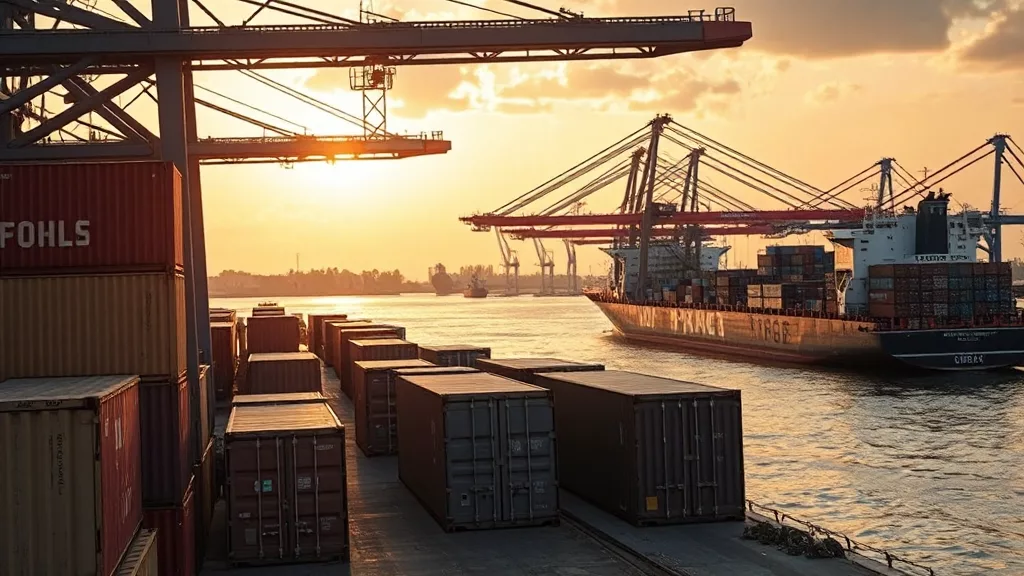
East Africa's logistics sector registered growth of 22 per cent in the twelve months to June 2026, with Kenya's infrastructure ecosystem at the centre of an expansion that is reshaping trade flows across the region. The figures, released by the East African Business Council (EABC) in its mid-year trade report, confirm that freight volumes, warehousing demand, and last-mile delivery services have all accelerated sharply as post-pandemic supply chain rationalisation continues to favour consolidated regional hubs over fragmented national networks.
Kenya sits at the heart of this transformation. The Port of Mombasa handled a record 1.73 million TEUs (twenty-foot equivalent units) in H1 2026 — an 18 per cent increase on the same period in 2025 — as investments in the Berth 21 and 22 expansion project added 400,000 TEUs of annual capacity. Container dwell times, which averaged 6.2 days in 2022 and were a chronic source of trader complaints, have fallen to 3.1 days, placing Mombasa within striking distance of the Durban port benchmark and well ahead of Dar es Salaam on efficiency metrics.
SGR: The Rail Revolution Continues
The Standard Gauge Railway remains the centrepiece of Kenya's logistics upgrade. Freight volumes on the Mombasa-Nairobi-Naivasha corridor reached 7.4 million tonnes in H1 2026, surpassing the full-year figure for 2023 and vindicating the government's decision to extend the inland container depot network to Kisumu and Eldoret. Average transit time from Mombasa to Nairobi ICD has been compressed to 8.5 hours — against 12 to 16 hours by road — a saving that translates directly into import duty payment timelines and working capital cycles for importers.
Kenya Railways Corporation Chief Executive Philip Mainga confirmed in June that a new SGR passenger-freight integrated timetabling system, developed with technical assistance from China Railway, will be operational by October. "We are moving towards a model where the same infrastructure serves both the commuter and the cargo customer with minimal conflict," Mainga said. "That is the efficiency dividend that justifies the original investment."
The extension of SGR services to Malaba — on the Uganda border — remains the transformative piece. Construction of the Naivasha-Kisumu section is 44 per cent complete, and the government has reaffirmed a 2028 completion target, which would give Uganda, Rwanda, and Burundi seamless rail access to Mombasa and fundamentally alter the economics of East African trade.
Warehousing and Cold Chain Expansion
Private sector logistics investment has followed public infrastructure spending with a lag that is now closing rapidly. Global players including Agility Logistics, Bolore Africa (operating under its Meridian rebranding), and DHL Supply Chain have all expanded their Nairobi and Mombasa footprints in 2026, collectively adding over 180,000 square metres of grade-A warehousing space. The Tatu City and Tilisi industrial parks have absorbed the majority of this new development, with vacancy rates in both parks running below 8 per cent — a landlord's market by any regional standard.
Cold-chain logistics has been a particular growth segment, driven by the horticulture export boom, the expanding SHA-linked pharmaceutical distribution network, and growing domestic demand for chilled food retail. CEMEX Logistics Kenya and Kenya Cold Chain Solutions have both announced capacity expansions exceeding Ksh 3 billion combined, with government support through the Kenya Climate-Smart Agriculture infrastructure grant programme partially funding the agricultural cold-chain nodes.
Challenges: Roads, Corruption, and the Last Mile
Kenya's logistics story has a less flattering chapter that the EABC report also documents: road infrastructure beyond the Northern Corridor remains severely underfunded. The Isiolo-Moyale highway, critical for Ethiopia transit traffic, has deteriorated markedly since the El Nino flooding of 2024, with 62 kilometres of surface now rated impassable for heavy goods vehicles in wet conditions. Kenya National Highways Authority (KENHA) has confirmed emergency rehabilitation works but funding timelines remain unclear under the constrained 2026 development budget.
Corruption at road weighbridges and police checkpoints continues to add an informal tax estimated by the Kenya Transport Association at between Ksh 3,000 and Ksh 8,000 per long-haul journey — a levy that falls disproportionately on smaller transporters and inflates consumer prices. The Directorate of Criminal Investigations launched Operation Clean Corridor in March, with mixed early results.
These caveats notwithstanding, the overall trajectory is clear. Kenya's logistics sector is operating at the scale and sophistication of a genuine regional hub, and the 22 per cent growth figure suggests the market is still far from saturation. For a country eyeing its position as it approaches the 2028 Los Angeles Olympic year — a moment of heightened global visibility — the efficiency of its supply chains is as much a soft-power story as a commercial one.